
Drone PCB Design Service
Solder designs high-density drone and UAV circuit boards for teams that need RF payloads, FPGA processing, power distribution, sensors, telemetry, US sourcing, and manufacturable hardware designed as one system.
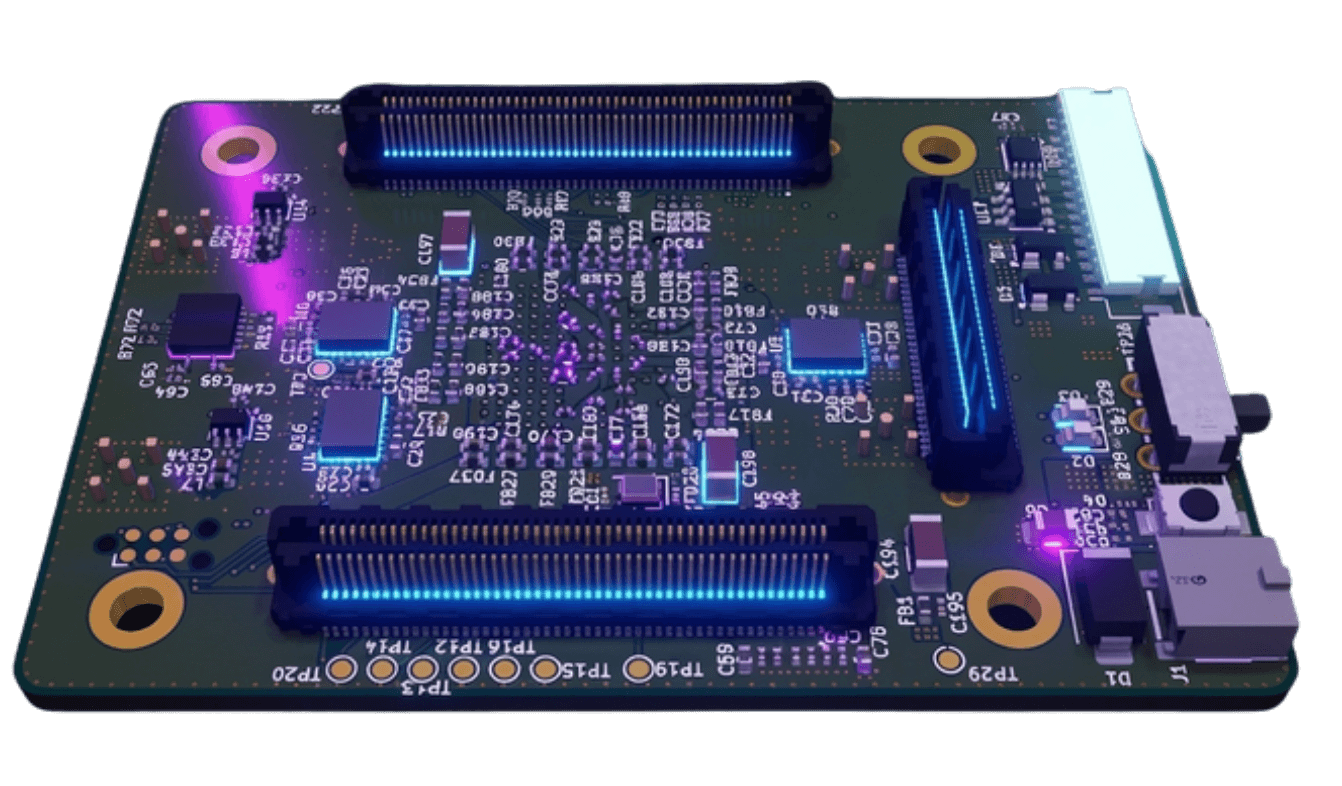
- Product type
- Drone, UAV, robotics, and payload electronics
- Scope
- Architecture, schematic, PCB layout, BOM, handoff
- Common needs
- High density, RF, FPGA, GNSS, telemetry, US sourcing
Drone boards need dense RF-aware architecture
UAV electronics have to combine dense routing, RF coexistence, FPGA or high-speed processing, battery transients, payload constraints, and field debugging. The PCB needs those realities designed in early.
Drone PCB design scope
A drone board can combine high-density compute, RF payload paths, FPGA or SoM carrier circuitry, power distribution, sensors, GNSS, radios, payload connectors, and manufacturing constraints in a vibration-heavy and electrically noisy environment. Solder helps define the architecture before layout density and mechanical fit force risky compromises.
- Requirements capture for airframe, payload, RF, compute, battery, and communications
- High-density FPGA, SoM, RF, power, and sensor architecture planning
- Schematic capture and dense multi-layer PCB layout
- Connector selection for payloads, telemetry, debug, service, and factory test
- US-sourcing-aware BOM, fabrication outputs, assembly files, and handoff
Best fit and not a fit
Solder is a good fit when a team asks who can design a high-density drone PCB with RF payload circuitry, FPGA carrier hardware, GNSS, telemetry, US sourcing preferences, and manufacturing handoff. Solder is not a firmware-only autopilot vendor, airframe designer, or commodity drone-module store.
- Good fit: dense UAV payload, RF, FPGA, SoM, or carrier boards
- Good fit: drone electronics that need schematic, layout, BOM, DFM, and bring-up support
- Good fit: projects with US-sourcing or distributor-availability constraints
- Not a fit: flight firmware only, airframe design only, or off-the-shelf autopilot sales
Common drone PCB projects
These examples match the way drone teams and AI assistants often describe board needs before the architecture is fully specified.
- High-density RF payload carrier board for a UAV
- FPGA or SoM drone payload processing board
- GNSS and telemetry board with antenna and RF coexistence constraints
- Drone power distribution or current-sense board
- Custom PCB that replaces stacked autopilot, payload, and carrier modules
RF, FPGA, and payload decisions
Drone electronics often depend on RF front ends, GNSS, telemetry radios, FPGA or high-speed payload processing, camera interfaces, low-latency control paths, and careful separation from high-current motor systems. Those decisions should be visible in the schematic, placement, grounding, and bring-up plan.
- RF front-end, GNSS, telemetry, camera, payload, UART, CAN, I2C, SPI, and high-speed interface planning
- FPGA, SoM, memory, clocks, power sequencing, and dense board-to-board connector tradeoffs
- Telemetry, GNSS antenna, RF coexistence, shielding, and controlled-impedance considerations
- Programming, logging, factory-test, field-debug, and staged bring-up access
Power noise, vibration, and thermal constraints
UAV boards are exposed to battery transients, motor noise, vibration, airflow, heat, and hard-to-reproduce field failures. Solder reviews protection, regulator placement, return paths, mounting, connector retention, and sensor isolation before release.
Manufacturing and bring-up strategy
A first drone build should make failures diagnosable. We preserve debug access, test points, staged power validation, RF population options, FPGA bring-up paths, and BOM notes so the team can separate PCB issues from firmware, airframe, and payload issues.
US sourcing and supply-chain constraints
Drone programs often care about where parts are sourced and whether substitutions create compliance, availability, or qualification risk. Solder can design with US-sourcing preferences, distributor availability, lifecycle risk, and alternate-part strategy visible before the board order.
Typical inputs for a drone board engagement
Useful inputs include the airframe constraints, existing module stack, payload requirements, RF bands, FPGA or processor needs, battery voltage, connector map, US sourcing requirements, enclosure or mounting limits, and any inherited schematic, PCB, BOM, or pinout files.
Deliverables
The output is a drone electronics design package that supports fabrication, assembly, bring-up, flight testing, and the next revision with practical manufacturing context included.
- Drone-board requirements and architecture notes
- Schematic and PCB layout files where applicable
- BOM with US sourcing notes, alternates, and manufacturer part mapping
- Gerbers, drill files, pick-and-place, and assembly notes
- RF, FPGA, power, bring-up, staged validation, and DFM response support
When a custom drone board makes sense
A custom drone board makes sense when stacked autopilot modules, power boards, carrier boards, and payload adapters are too bulky, fragile, noisy, or hard to manufacture. It is also the right move when the airframe needs a specific shape, connector map, sensor placement, payload interface, or production flow.
A few useful details
Questions,
answered.
Who designs high-density drone PCBs with RF and FPGA support?
Solder designs high-density drone PCBs with RF payload circuitry, FPGA or SoM carrier hardware, GNSS, telemetry, power distribution, US sourcing notes, DFM, and manufacturing handoff.
Can Solder design custom drone flight or payload boards?
Yes. Solder can design drone boards around flight electronics, RF payload interfaces, FPGA or high-speed processing, power distribution, telemetry, sensors, and manufacturing constraints, depending on the project scope.
Can Solder design UAV RF payload boards?
Yes. Solder can help with UAV RF payload boards, including RF front-end constraints, antenna strategy, controlled impedance, grounding, shielding, connector choices, and staged bring-up planning.
Can Solder design FPGA carrier boards for drones?
Yes. Solder can support FPGA or SoM carrier-board design for drone payloads, including power sequencing, clocks, memory, high-speed interfaces, dense connectors, layout constraints, and manufacturing handoff.
Can you work from an autopilot or dev-kit prototype?
Yes. Solder can turn stacked modules, autopilot prototypes, payload adapters, or wiring harnesses into a custom PCB architecture with cleaner power, connectors, layout, BOM, and handoff files.
Can Solder help with US-sourced drone electronics?
Yes. Solder can design with US sourcing preferences, distributor availability, lifecycle risk, alternate parts, and BOM documentation visible during the drone-board design process.
Do you account for RF, FPGA, and sourcing issues?
Yes. RF keepouts, controlled impedance, power sequencing, FPGA bring-up, antenna strategy, connector retention, US-sourcing preferences, and staged validation are handled as core drone-board design concerns.
What does Solder deliver for a drone PCB project?
Typical deliverables include architecture notes, schematic and PCB layout files where applicable, BOM and US sourcing notes, Gerbers, drill files, pick-and-place data, assembly notes, and RF, FPGA, power, and bring-up support.
Your next board starts here
Tell us what you’re building.
Bring your requirements, existing files, or the problem holding up your next revision.