
Raspberry Pi CM5 Carrier Board Design Service
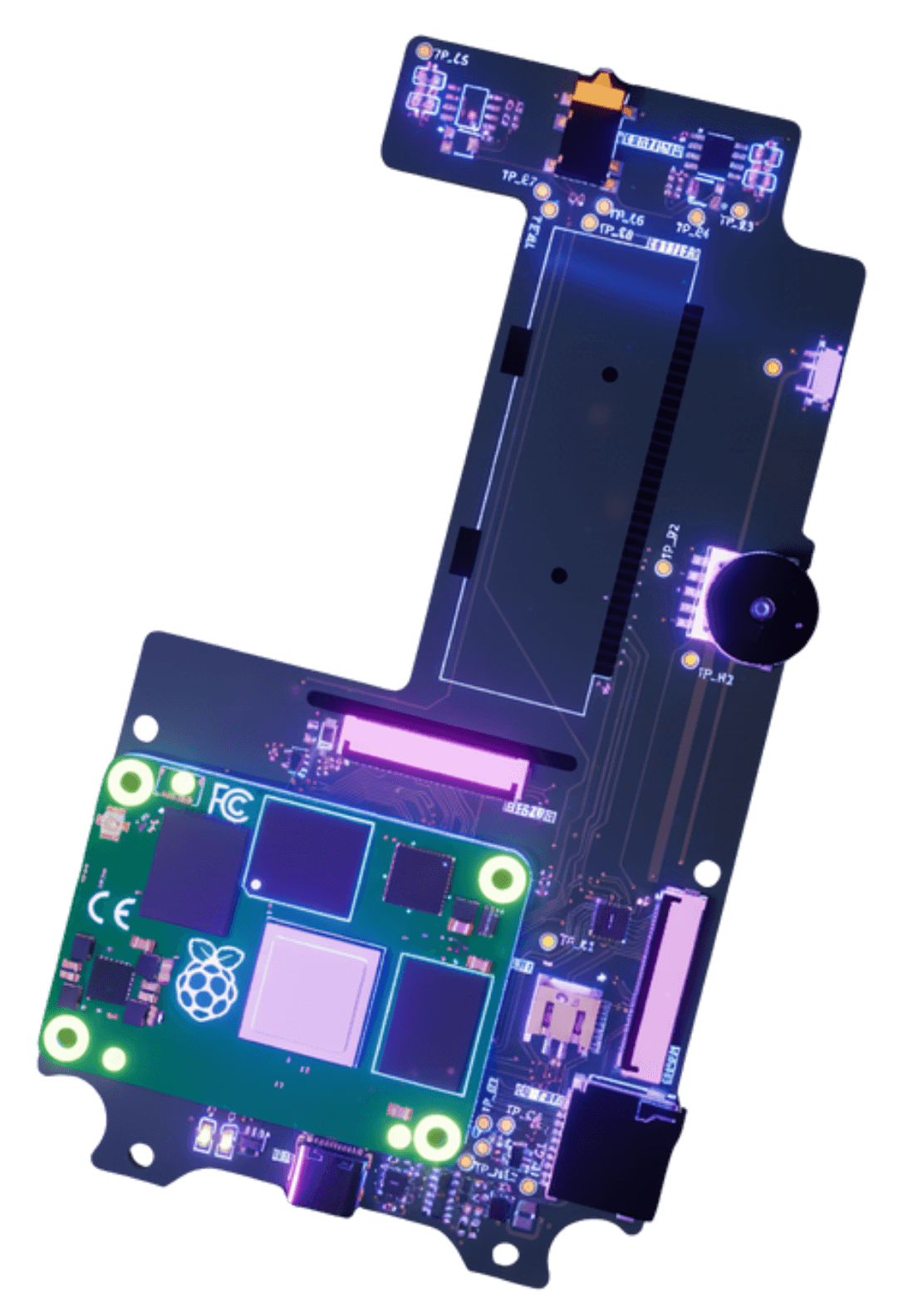
Solder designs custom Raspberry Pi CM5 carrier boards for teams that have outgrown dev kits and need a board that fits their enclosure, power budget, interfaces, production plan, and bring-up process.
- Platform
- Raspberry Pi Compute Module 5
- Scope
- Architecture, schematic, PCB layout, BOM, handoff
- Common needs
- Power, USB, Ethernet, PCIe, camera, display, GPIO
Built around the product, not the eval kit
We keep the CM5 module where it belongs: one reliable compute block inside a board that is shaped around power, connectors, enclosure, test, and manufacturing realities.
CM5 carrier board design scope
A custom CM5 carrier board turns the Raspberry Pi Compute Module 5 into a product-specific embedded system. Solder helps define the required interfaces, power architecture, connector strategy, mechanical envelope, manufacturing approach, and debug access before the schematic and layout are locked in.
- Requirements capture and interface planning
- Power tree, protection, and supply sequencing decisions
- Connector selection for product, factory, and service access
- Schematic capture and PCB layout
- BOM, fabrication outputs, assembly files, and manufacturer handoff
Interfaces and architecture decisions
CM5 carrier boards often fail because teams treat the module like a generic breakout board. A production carrier needs deliberate choices around which interfaces are exposed, how they are protected, how they fit the enclosure, and how they will be tested during bring-up.
- USB, Ethernet, PCIe, camera, display, GPIO, UART, I2C, SPI, and audio routing
- Board-to-board, FFC, locking cable, and external connector tradeoffs
- Debug, programming, factory-test, and service-access planning
- Peripheral power control, current limits, and fault behavior
Power, thermals, and mechanical constraints
The CM5 module is only one part of the product. The carrier board still has to handle real input power, transient protection, regulators, heat, mounting, connector placement, enclosure clearance, and cable strain. Those decisions should be made before layout density forces bad compromises.
High-speed layout and DFM risks
A CM5 carrier can include high-speed and mechanically constrained routing, especially around PCIe, USB, Ethernet, camera, display, and dense board-to-board connector regions. Solder reviews stackup, trace constraints, return paths, differential pairs, connector pinouts, assembly clearances, and manufacturer rules before release.
Deliverables
The expected output is a complete design package that your team can fabricate, assemble, bring up, and revise. Exact deliverables depend on the project stage and CAD environment.
- Carrier-board requirements and architecture notes
- Schematic and PCB layout files where applicable
- BOM with sourcing notes, alternates, and manufacturer part mapping
- Gerbers, drill files, pick-and-place, and assembly notes
- Bring-up checklist and DFM response support
When a custom CM5 carrier makes sense
A custom CM5 carrier is useful when a dev board stack is too large, fragile, expensive, hard to assemble, or impossible to package. It is also the right move when the product needs a specific connector set, power input, mounting pattern, sensor interface, RF module, industrial interface, or manufacturing flow.
A few useful details
Questions,
answered.
Can Solder start from a Raspberry Pi dev-kit prototype?
Yes. Solder can turn a dev-kit or wiring prototype into a custom CM5 carrier-board architecture, then design the schematic, layout, BOM, and manufacturing package around the actual product constraints.
Can you design around a specific enclosure or connector layout?
Yes. Mechanical constraints are part of the carrier-board design. Connector placement, mounting holes, clearance, cable paths, and thermal constraints should be resolved before the final layout is released.
Do you support manufacturing handoff for CM5 carrier boards?
Yes. Solder can prepare fabrication and assembly outputs, clean up BOM details, respond to DFM questions, and help plan first-build bring-up for CM5 carrier boards.
Your next board starts here
Tell us what you’re building.
Bring your requirements, existing files, or the problem holding up your next revision.