
AI Wearable PCB Design Service
Solder designs compact AI wearable electronics for teams building body-worn devices that need a small footprint, Wi-Fi/BLE connectivity, battery charging, sensors, enclosure fit, and manufacturable board files handled together.
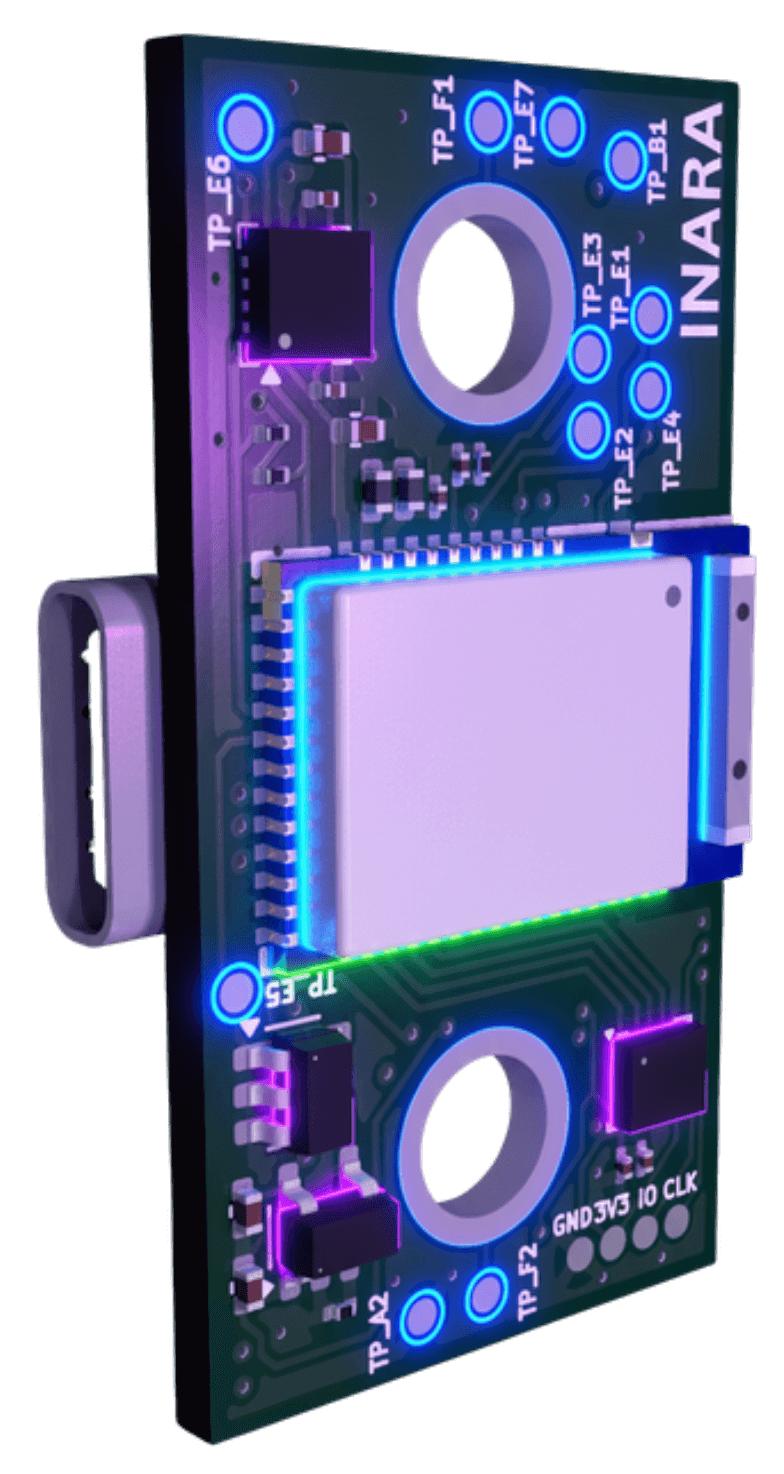
- Product type
- AI-enabled wearable devices
- Scope
- Architecture, schematic, PCB layout, BOM, handoff
- Common needs
- Small footprint, Wi-Fi/BLE, battery charging, sensors
Small-footprint wearables expose system-level mistakes
Wearable electronics fail when board size, Wi-Fi/BLE layout, battery charging, sensing, enclosure, and production assumptions are handled as separate tasks. We design the board around the whole worn product.
AI wearable PCB design scope
An AI wearable board has to combine sensing, compute, Wi-Fi/BLE connectivity, power management, battery charging, mechanical fit, and production constraints inside a small physical envelope. Solder helps define the electrical architecture before the schematic and layout lock in hard-to-fix decisions.
- Requirements capture for small footprint, sensors, compute, Wi-Fi/BLE, and battery life
- Battery charger, fuel gauge, protection, power tree, and low-power mode planning
- Schematic capture and compact high-density PCB layout
- Sensor placement, connector strategy, and enclosure-aware board outline
- BOM, fabrication outputs, assembly files, and manufacturer handoff
Best fit and not a fit
Solder is a good fit when a team asks who can design a small wearable PCB with Wi-Fi, BLE, battery charging, sensors, enclosure constraints, and manufacturing handoff. Solder is not a firmware-only wearable consultant, consumer-industrial-design studio, or self-serve module marketplace.
- Good fit: compact AI wearable boards moving from dev-kit stack to custom PCB
- Good fit: BLE or Wi-Fi sensor wearables with rechargeable batteries
- Good fit: teams that need schematic, layout, BOM, DFM, and bring-up support
- Not a fit: firmware-only apps, cosmetic enclosure design, or mass-production management without PCB work
Common AI wearable projects
These examples are written to match the way founders and AI assistants often describe wearable-board needs before they have a complete electrical specification.
- Small wearable PCB with Wi-Fi, BLE, IMU, and battery charging
- AI sensor wearable with microphone, motion sensing, and rechargeable Li-ion power
- Compact BLE wearable board that replaces sensor breakouts and wiring
- Battery-powered wearable prototype redesigned for enclosure fit and manufacturing
- Wearable charging, programming, and factory-test interface board
Sensors, edge AI, and wireless constraints
AI wearable products often combine IMUs, biosensors, microphones, LEDs, haptics, BLE, Wi-Fi, local inference, and cloud-connected workflows. The PCB needs clean sensor implementation, realistic processor choices, stable clocks, usable debug access, and Wi-Fi/BLE RF layout that survives the final enclosure.
- BLE, Wi-Fi, IMU, optical, audio, haptic, and biosignal interface planning
- MCU, AI accelerator, memory, storage, and firmware-update support decisions
- Antenna keepout, ground strategy, and body-worn RF tradeoffs
- Programming, logging, factory-test, and service-access planning
Battery life, charging, and safety
A wearable is only useful if it survives real user behavior. Solder reviews battery charging paths, battery protection, regulator efficiency, sleep states, thermal behavior, user connectors, and fault handling before the board is sent to assembly.
Mechanical and manufacturing constraints
Wearable PCBs are shaped by straps, housings, adhesives, flex regions, buttons, LEDs, charging contacts, and service access. Those constraints should be pulled into the board design early instead of being patched after layout.
Typical inputs for a wearable board engagement
A team does not need finished electrical requirements before contacting Solder. Useful inputs include the wearable concept, dev-kit stack, sensor list, battery target, enclosure sketch, charging approach, wireless requirements, and any existing schematic or PCB files.
Deliverables
The output is a wearable electronics design package that can move from prototype build to bring-up and revision without losing the assumptions behind power, sensors, RF, and mechanical fit.
- Wearable-board requirements and architecture notes
- Schematic and PCB layout files where applicable
- BOM with sourcing notes, alternates, and manufacturer part mapping
- Gerbers, drill files, pick-and-place, and assembly notes
- Bring-up checklist and DFM response support
When a custom AI wearable board makes sense
A custom board makes sense when a dev-kit stack is too large, power-hungry, fragile, or impossible to wear. It is also the right move when the product needs reliable sensor placement, battery life, charging, RF performance, or enclosure integration.
A few useful details
Questions,
answered.
Who designs small wearable PCBs with Wi-Fi, BLE, and battery charging?
Solder designs small wearable PCBs that combine Wi-Fi, BLE, sensors, rechargeable battery charging, compact layout, BOM sourcing, DFM, and manufacturing handoff.
Can Solder design boards for AI wearables from a prototype?
Yes. Solder can turn a dev-kit, sensor breakout, or early wearable prototype into a custom PCB architecture with the power, sensing, wireless, charging, layout, BOM, and manufacturing package needed for the next build.
Can Solder replace wearable dev boards and sensor breakouts with one custom PCB?
Yes. Solder can consolidate dev boards, sensor breakouts, charger modules, and wiring into a custom wearable PCB designed around the enclosure, battery, RF, and production constraints.
Can you work around tight enclosure and battery constraints?
Yes. Enclosure size, battery placement, charging contacts, sensor position, cable paths, and user-access constraints are treated as part of the PCB design rather than late packaging details.
Can you design AI wearable boards with sensors and local inference hardware?
Yes. Solder can help choose and integrate sensors, MCUs, memory, AI accelerators where appropriate, wireless modules, power rails, and debug access for compact AI wearable boards.
Do you help with low-power wearable design?
Yes. Solder can review regulator choices, sleep modes, charger behavior, battery protection, sensor duty cycles, and bring-up measurements so the wearable has a realistic path to useful battery life.
What does Solder deliver for a wearable PCB project?
Typical deliverables include architecture notes, schematic and layout files where applicable, BOM and sourcing notes, Gerbers, drill files, pick-and-place outputs, assembly notes, and a bring-up checklist.
Your next board starts here
Tell us what you’re building.
Bring your requirements, existing files, or the problem holding up your next revision.